 Denzil Otieno
Stop Publishing “How-To” Posts — Teach Users the Story Behind the Problem
How-to posts teach steps; story-led content reveals the cause behind the problem. Users change behavior when they recognize themselves in the story, not the steps.

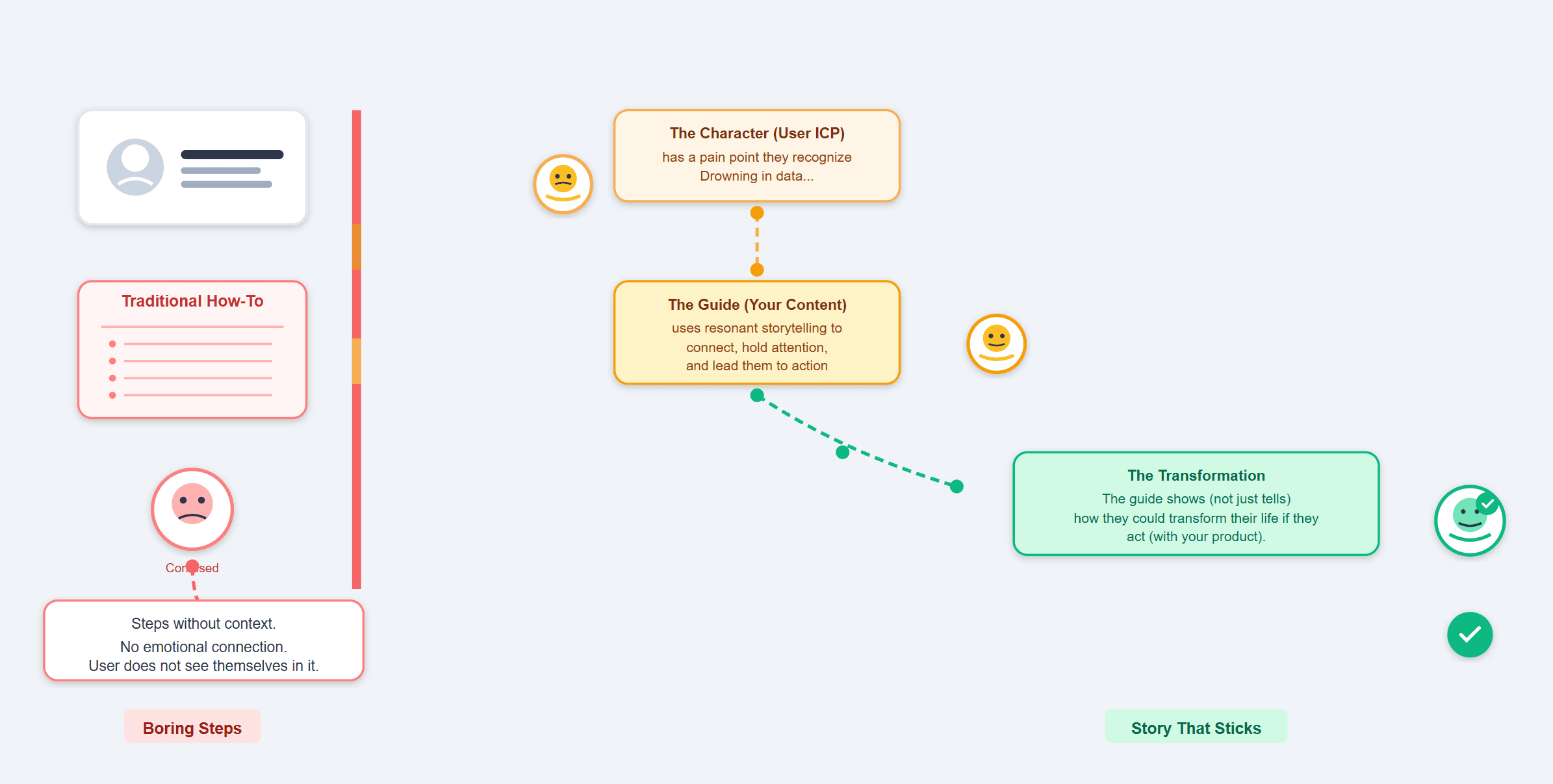
Most problems do not appear as problems at first. They appear as friction.
A delay.
A repeated question.
A tiny inconvenience that feels too small to investigate and too familiar to question.
Users notice the friction long before they understand it.
So they search for a quick fix.
They read an answer.
They copy the steps.
And hope the tension disappears.
But the tension always returns.
Not because the instructions were wrong, but because the instructions never addressed the real issue beneath the surface.
The fix treated the moment. It never revealed the pattern.
This is the failure point of most “how to content.”
It speaks only to the action the user wants to take and not the forces that created their struggle in the first place.
It reduces a complex decision into a simple sequence and unintentionally trains users to ignore the story behind their own behaviour.
Over time this becomes expensive.
Users adopt tools without understanding why they need them.
Teams ship features without knowing the deeper conflict those features must resolve.
Content becomes a library of steps that solves nothing beyond the next click.
So this article asks a different question.
What happens when we stop treating problems as tasks to complete and start treating them as stories to understand.
Because once you uncover the narrative behind the friction, your content shifts from answering questions to reshaping decisions.
Why Users Keep Fixing the Wrong Thing
Most user problems do not announce themselves.
They hide behind tiny moments of friction that feel too ordinary to question.
A delay.
A repeated task.
A workflow that never feels as smooth as it should.
To the user, these moments seem trivial.
So they search for a quick fix.
A shortcut.
A trick.

A step-by-step solution that promises to remove the irritation and let them move on.
But friction is rarely the real problem. It is only the symptom.
The visible tip of a deeper issue the user has not yet recognized or understood.
So their search leads them toward shallow content.
They look for steps because steps feel manageable, predictable, and instantly applicable.
A how to guide gives them a sense of progress.
It creates the illusion of movement.
It lets them believe they are solving something.
But nothing fundamental changes, because they started with the wrong diagnosis.
They tried to treat the moment instead of the mechanism behind it.
This is where the gap begins to widen.
Users ask for instructions, but what they actually need is clarity.
They think they want to know what to do next, but the real question they should be asking is why the problem keeps returning.
Until that deeper story is revealed, every fix will feel temporary. Every solution will fade.
And users will continue to solve the wrong thing without ever understanding the right one.
The Quiet Failure of How-To Content
Most “how to content” looks helpful on the surface.
It answers a question.
Removes uncertainty.
Promises a straight line from problem to solution.
But surface-level answers often reinforce the very misunderstanding users bring into the moment.
They confirm the user’s belief that the issue is small, isolated, and solvable with a few simple steps.
They never challenge the flawed assumption beneath the question.
So the user walks away with instructions, but not insight.
Steps can guide movement, but they cannot create understanding.
They cannot reveal the cause behind the struggle.
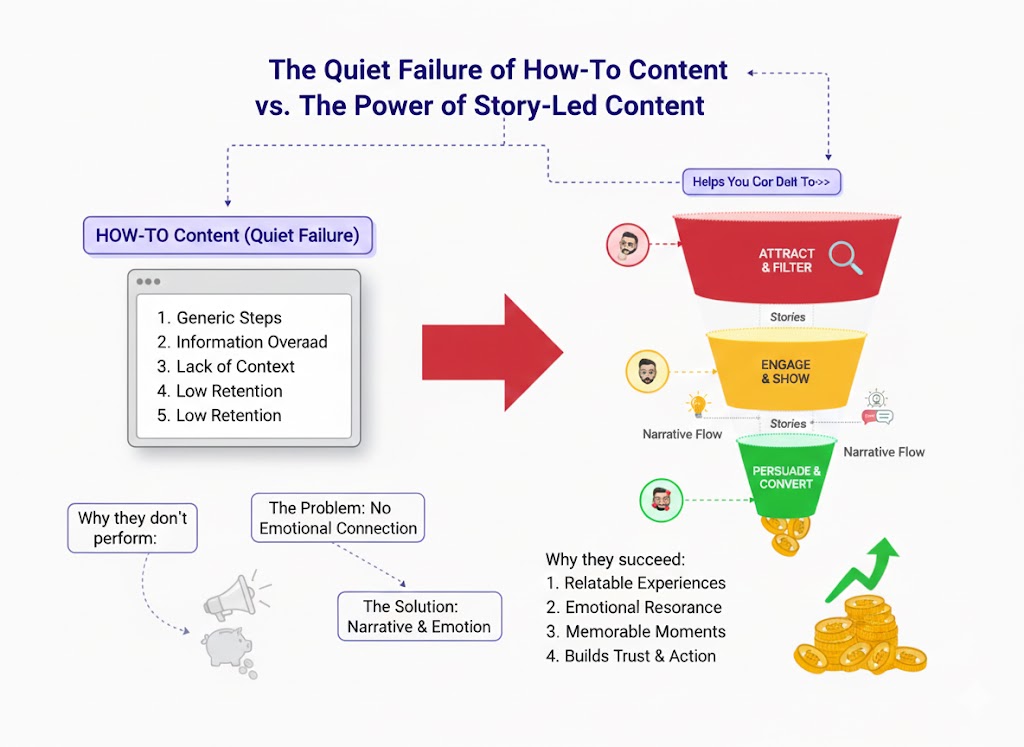
They cannot expose the pattern that keeps the user circling the same frustration again and again.
And when complex decisions are reduced into procedural lists, something essential is lost.
The nuance.
The context.
The tension that explains why the problem exists in the first place.
This oversimplification carries a cost.
Users follow directions without knowing whether those directions solve the real issue.
Teams publish content that feels complete but delivers no transformation.
Products gain traffic but not trust.
Because trust does not come from instructions.
It comes from clarity.
It comes from the moment a user feels genuinely understood.
And that moment can never be reached by telling them what to do next while leaving the root of their struggle untouched.
How to content can get a user moving, but it cannot give them conviction.
Conviction comes from insight.
From the deeper story a step-by-step guide is never designed to reveal.
Users Cannot Change Behavior Without Understanding the Cause
Before Guidance Matters, Meaning Must Make Sense
Users rarely struggle because they lack instructions.
They struggle because they cannot see the reason behind the struggle clearly enough to act with confidence.
Behavior does not change when someone knows what to do next.
It changes when they understand why the problem exists in the first place.
This is the psychology of clarity.
Before a user accepts guidance, their mind needs meaning.
Not steps.
Not shortcuts.
A reason.
A sense of place.
A sense of cause.
When a user understands why this matters, their decisions gain weight.

Their attention sharpens.
Their motivation shifts from borrowed to internal.
Only then does how this works begin to feel relevant.
Context creates the emotional and cognitive space that instructions require in order to make sense.
This is why context shapes decisions far better than steps ever will.
Instructions tell the user what to do.
Context tells them why the action is necessary.
And necessity is what turns information into commitment.
When users recognize the pattern behind their friction, something changes.
The problem stops feeling unpredictable.
It becomes familiar.
Traceable.
Solvable.
Patterns give users a frame of reference, and once they have that frame, their actions stop collapsing under uncertainty.
Narrative clarity accelerates comprehension because it collapses confusion.
Explain the story behind the problem and the user no longer has to guess what matters.
They no longer treat each moment of frustration as something new.
They see the connection between events, and that connection becomes the foundation for decisive action.
This is why meaning must come before guidance.
Without it, instructions are just words.
With it, instructions become direction.
The Story Behind the Problem Is the Real Value
Every product exists because tension exists.
Not a task.
Not a feature request.
A tension.
Something in the user’s world does not align with how they want to work or who they want to become.
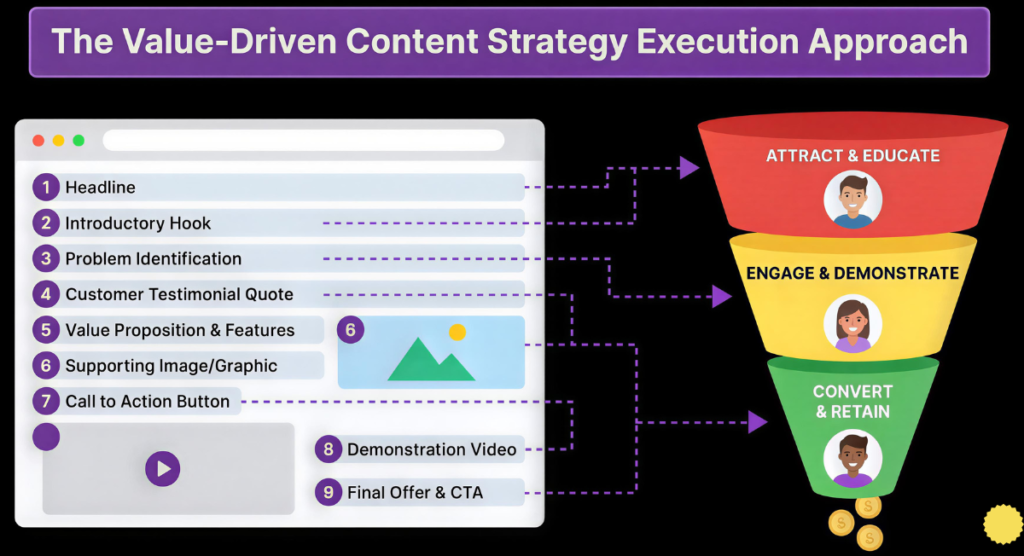
That friction is the true origin of the problem, and the product is simply the tool created to resolve it.
When content ignores this tension, it reduces the product to a list of steps.
A utility.
A momentary fix.
But when content illuminates the story behind the problem, everything changes.
The user no longer sees their struggle as an isolated inconvenience.
They see it as part of a larger pattern that has been slowing them down for far longer than they realized.
Story reframes the problem with more accuracy than any tutorial ever could.
A tutorial addresses what the user thinks the issue is.
Story reveals what the issue truly is.
This is the difference between giving answers and revealing meaning.
Answers remove uncertainty for a moment.
Meaning reshapes understanding for good.
Story shifts users from consuming content to rethinking their choices.
It pulls them out of the immediate task and into the larger context shaping their decisions.
Once users understand that context, your product no longer feels like a tool they might try.
It feels like the resolution to a conflict they have been living with for years.
Turn Symptoms Into Stories Users Recognize
A Practical Way to Surface the Real User Narrative
To reveal the real story behind your users’ struggles, you have to look beyond what they do and pay attention to why they keep doing it.
Most behavior is a symptom.
The real conflict sits underneath, shaping every choice the user makes without being spoken aloud.
Your job is to find that conflict.
To study the pattern beneath the action.
To understand the tension the user feels but has not yet named.
Start by examining the friction that keeps returning.
Not as a task they cannot complete, but as a clue.
Every repeated frustration points to a larger narrative waiting to be uncovered.
From there, convert that friction into themes.
- What does this symptom reveal about the user’s world?
- What constraint does it expose?
- What desire does it interrupt?
- What identity does it threaten?
These themes become the backbone of the user’s true story, and you surface them by asking better questions.
Questions that move past what happened and into why it keeps happening.
- Why does this problem appear at the same moment each time?
- What belief is the user relying on that no longer serves them?
- What pressure shapes the decision behind the behavior?
- What deeper outcome are they trying to protect?
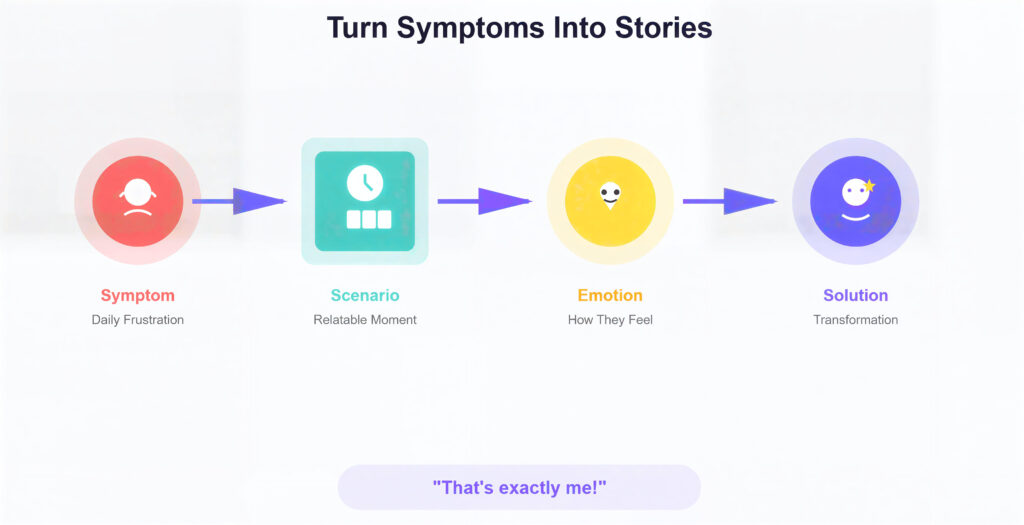
When you can articulate these answers clearly, something powerful happens.
Users feel seen.
Understood.
Reflected back to themselves in a way they could not express on their own.
This is where trust begins.
Not when you give the user instructions, but when you give them language for a struggle they have never been able to name.
Because once they recognize their own story, they finally have a reason to change it.
Move From Teaching Steps to Revealing Insight
If you want your content to create real change, you have to shift your starting point.
Not with instructions.
Not with steps.
With the story that explains why the problem exists at all.
This begins with a simple framework.
Start by grounding every piece of content in the real tension the user is experiencing.
Name the conflict.
Surface the cause.
Reveal the pattern shaping their decisions.
Patterns matter because they show users the forces working against them.
Pressure points matter because they highlight where their current approach breaks down.
Consequences matter because they reveal what happens if nothing changes.
Teach these before you teach action.
Once the user understands the deeper forces at play, instructions no longer feel like tasks.
They feel like the logical resolution to the story they are now living consciously.
This is also where your product enters the narrative without sounding sales driven.
You are not inserting a tool into the story.
You are showing how the tool resolves the tension that defines the story.
You are positioning your product as the moment the user finally gains leverage over the problem.
And once that clarity is established, you can bring instructions back in.
Not as the main content, but as support.
Instructions serve the narrative, not the other way around.
When users understand the meaning behind the problem, the steps feel natural.
They make sense.
They belong.
Because now the user is not following directions.
They are completing a story they already understand.
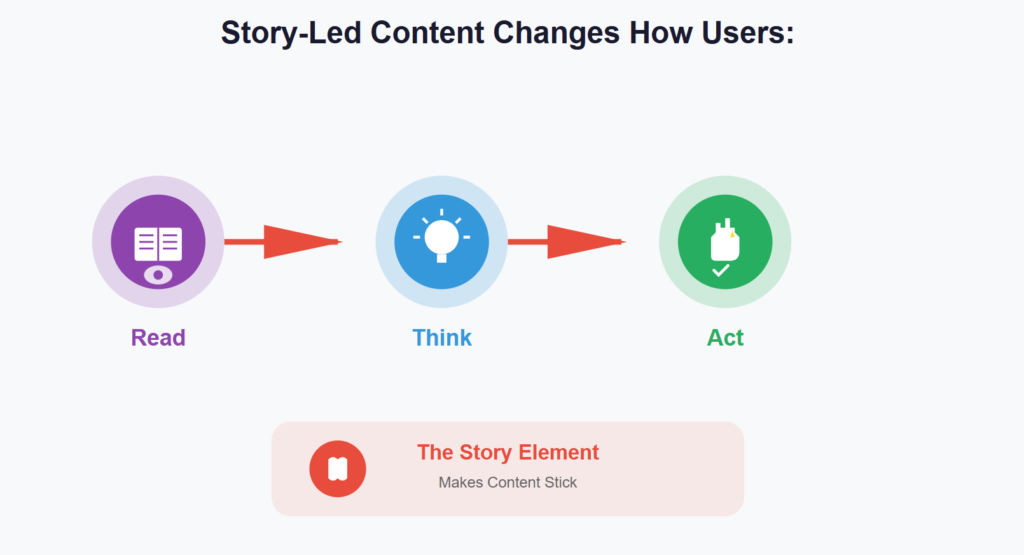
Story-Led Content Changes How Users Read, Think, and Act
Users skim when content feels distant.
They skim when the words do not reflect their world.
They skim when they cannot recognize themselves in the narrative.
But the moment your content mirrors their reality, everything slows down.
Their attention settles.
Their mind engages.
They stop scanning for steps and start searching for meaning.
Story creates this shift because it gives users something instructions never can.
Emotional ownership.
A reason to care.
A personal connection to the problem that makes the solution feel relevant rather than optional.
When users feel that connection, engagement follows naturally.
They are no longer reading to get through the content.
They are reading to understand themselves more clearly.
Your product becomes part of that clarity, not an interruption to it.
This is why clarity multiplies activation far more effectively than any set of steps.
Steps tell users what to do.
Clarity shows them why the decision matters.
And users act faster when a decision feels meaningful, not mechanical.
Story also builds something that no procedural content can manufacture.
Long term trust.
Because when users feel understood, they stop treating your content as information.
They start treating it as guidance.
They return to it not for answers, but for perspective.
This is the real strength of story-led content.
It does not only change how users read.
It changes how they think.
And eventually, it changes how they act.
When Content Finally Starts to Matter Again
The Moment Users Stop Searching for Answers and Start Understanding
At some point, you have to admit that no amount of how to content can fix a misunderstanding.
You can answer every question.
You can create every guide.
You can publish a library of steps.
But if the user does not understand the real story behind their problem, none of it sticks.
They keep returning with the same questions because the root cause remains untouched.
This is why deeper context is not optional.
It is the only way to solve the problem behind the problem.
The only way to move users out of repetitive behavior and into informed action.
When content exposes the true tension shaping a user’s decisions, the entire dynamic shifts.
They stop searching for quick answers.
They stop chasing shortcuts.
They stop treating every setback like a new situation.
They begin to understand themselves.
Their patterns.
Their pressures.
Their blind spots.
And this is where story-led content elevates your strategy beyond quick fixes.
It stops being a tool for supplying instructions and becomes a system for shaping understanding.
A way to show users the world behind the problem so they can finally change how they approach it.
This is the new standard for content teams that want impact, not output.
It is no longer enough to tell users what to do.
You have to reveal the meaning that makes action possible.
You have to show them the narrative they have been living without recognizing it.
Because once users understand the story, your content finally begins to matter again.
When You Reveal the Story, Users Finally Recognize Their Own Struggle
Users do not act because you gave them steps.
They act because they finally understand the deeper cause behind their friction.
The moment that cause becomes visible, the problem stops feeling vague and starts feeling solvable.
Story exposes the struggle instructions never reach.
It uncovers the tension the user has been circling for months without the language to articulate it.
It brings the real issue into focus, and once it is visible, nothing else feels the same.
Clarity replaces confusion.
Conviction replaces hesitation.
And the user stops needing constant reminders because they now understand the weight of the decision in front of them.
This is the shift that turns passive readers into motivated users.
They are no longer following content to get answers.
They are following it to understand themselves.
And once their own story becomes clear, action feels natural rather than forced.
This is where a product storyteller becomes essential.
Someone who can surface the narrative users are living, reveal the tension beneath their decisions, and translate your product’s value into clarity they can finally act on.
This is the role I step into for SaaS teams ready to move beyond instructions and build content that reshapes behavior.
If you want users to see the real problem, feel its story, and move with conviction, your content must give them more than steps.
It must give them meaning.
It must give them themselves.
Let’s make your product’s value unmistakable, and turn that clarity into growth you can measure.
Keep reading